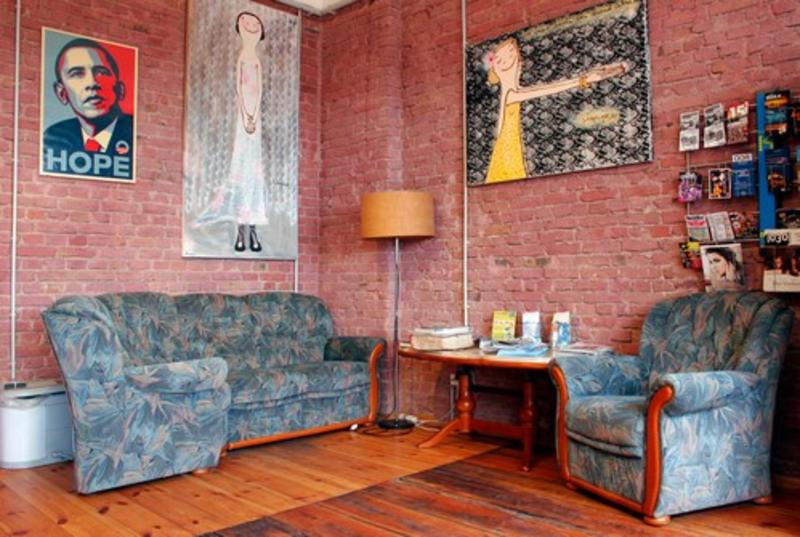
Today my group decided to do a test shoot for our interview to see how long it would take to rig and get ready for a shoot and to rig down and to test out the equipment we will be using.
Rigging up went pretty well and took about 40 minutes. We didn't get the big LED light for the test shot so we got more shadow on our test presenter and interviewee than we'd have if we had the big light. Another way we could have sorted out the shadows, especially the ones on the wall, could be to move the interviewee away from the fall. That way we would eliminate the big shadow behind Jason's head. Unfortunately, we didn't think of that when we were filming.
Another issue we had was that on one of the cameras we were planning to use (Canon 600D) didn't have the option of 'Kelvin' when choosing white balance. We therefore chose to use the uni's 7D instead since we need to be able to put the white balance on the same level on every camera when shooting multi-camera. Sound wise the set-up went pretty well. We decided to do the set-up with the clip mics on a zoom instead of using the TASCAM since using the zoom would be easier and the sound quality was still very good.
When editing the footage I noticed that some parts of the footage were grainy. We'll fix that when shooting the actual interview by using more lights, try to avoid dark areas with little light (if we can't fix it with the lights we have) and to use lenses that have lower aperture when filming where there might be a risk of the footage being grainy.
The equipment we will be using for the interview is: Camera:
- Canon 7D
- Canon 70D
- Canon 60D Lenses:
- x2 50mm f/1.8
- 24-70mm f/2.8
- 70-200mm f/2.8
- Some standard lenses (f/4.5) and wide lenses Sound:
- Zoom
- 2x Røde mics
- 2x Clip mics
- Boom mic Lights:
- 2x Small LED lights
- 2x Ring lights
- Standard LED Extra
- 2x batteries for every camera
- 2x Memory cards for every camera
- Reflector
- Shoulder rig
On Monday we had a workshop at the Historic Dockyard were we got separated into groups, given a location and asked to do a full risk assessment of the location and to make a short documentary.
My group were given the ship HMS Cavalier. Quick facts about the boat: - Retired C-class destroyer of the Royal Navy.
- One of 96 War Emergency Programme destroyers ordered between 1940 and 1942.
- Commissioned on 22 November 1944, decommissioned in 1972
- Served in the WW2 and various commissions in the Far East
- After decommissioning she was preserved as a museum ship
Some of the risks we found at the location were confined space, steep stairs, members of public, surrounded by water and only 2 fire exits.
We decided to do an interview of one of the people working on the boat telling a bit of it's history and then walk around getting the GV's that we wanted. Because we were limited for time we didn't use as much tripod as we wanted since we needed quite a bit of coverage and felt we didn't have time to set up the tripod for every shot. That resulted in a lot of the footage being quite wobbly. We also forgot to set the white balance when we went inside the boat which resulted in the footage being too yellow-y.
On Wednesday we looked at the footage from Monday and discussed everyone's clips in class. Helens quick filming-tips
- Pan max 45º
- Steady in/out
- Move from A to B
- Reveal
- Motivated moves
- Zoom - frame up
- Reset the camera before use
- Check the equipment for fingerprints/dirt
"It's better to have few good clips that you can use, than a lot of bad clips you can't use."
After the lesson we went to edit our footage into a short documentary. We chose George to edit while the rest of us worked on our main documentary 'Are we Numb'. Here's the finished edit of the footage from the Dockyard.
Me and Gavin took on a Project for The FIRM quite a while ago. The project was to make the opening video to The FIRM Awards 2017.
The FIRM started as a LinkedIn Group in 2007 and has now nearly 8500 members in 71 countries. It's a supportive and collaborative community of corporate recruitment professionals who aim to support, develop and inspire their members.
As we didn't have much to work from for the video other than a couple of still pictures taken at last year's award we decided to use some of our own footage that we already had as well as going to London to get time-lapses and other footage. Gavin was in charge of talking to the commissioners, time-lapses and the titles while I did the main edit and was in charge of the GV's. We decided to make the film into somewhat of a guys travel showing a hooded character walking through London, breaking it up with some footage from different countries such as Whales, Norway, Italy and Spain, and back to the hooded guy where he gets closer and closer to the venue where the Award was talking place, ending the video with a time-lapse of the venue and the stills from last year's award. For the music we got a friend of ours in London to compose it.
As a Thank You for the video we got invited to the award ceremony 23rd of March and got free accommodation in London. It was a great opportunity for networking as we met a lot of lovely and skilled people. It was a great evening and I'm really happy to be part of the project and how the video turned out.
In early March me and Gavin signed up for BDF Marketing Communications and Events' 72 hour film challenge. The challenge was, as the name suggest, to create a film within 72 hours. The winning entries will be screened at their annual Film Festival on 20 June 2017.
Tuesday 21 March we were given the topic and had to Friday 5pm on Friday to send a finished project. The question was: "Business, technology, disability - how does technology showcase disabled talent."
The requirement for the challenge was:
- A team of minimum 1 person, maximum 5.
- Film length: 5-10 minutes
- Format: .AVI .MP4 or .WMV
Since we're in the middle of a documentary unit me and Gavin decided to make a documentary. That way we could use the challenge as practise for when we're going to go filming our actual project late April/early May. We decided to interview Joey Thompson who was in an accident and got confined to a wheelchair 2 years ago, and tell his story.
The equipment we decided to use was a ring light, 2 LED lights, 2 DSLRs, 2 tripods and 2 Røde mics which we plugged into the camera (more or less the same equipment that we are planning to use for our main project).
Filming went pretty well. Since we were filming with DSLRs it was easy to get all the GVs that we needed in a short amount of time. Filming the actual interview was a bit more of a problem as the batteries died quite quickly since we were doing a long, continuously shoot and the memory cards also got full too quickly. Luckily enough we had spare batteries, but no spare memory cards so we ended up having to spend time transferring the footage between shooting. It was a very nice experience as it opened our eyes for what we need to prepare for when shooting as neither me or Gavin thought we'd run out of battery or space on the memory cards that quickly. We are definitely bringing multiple batteries and SD cards when filming the actual project.
Since we had very limited time we were, in the beginning, debating whether or not to use lights since it would cost us extra time. Watching back I'm relly happy that we did decide to get lights, even though it was only some small ones. It ended up doing a massive difference erasing the shadows under the interviewee's eyes.
Looking at the documentary now I'm pretty pleased with what we managed to make, but I'm sad we weren't able to focus more on the technology part of the task that was given. But overall I'm very happy with the storytelling, the footage and the fact that we managed to pull it off only using our own equipment and having 72 hours at our disposal.
Directing documentaries
- Documentaries do not "just happen". They have to be researched, meticulously planned, scripted and set up.
- Control is the key throughout the pre, production and post-production process.
Sequences
- Just as with drama, we direct sequences for documentaries which (based on careful research) represent reality.
- Close ups are key. Repeat the action and beware continuity.
- Make sure the sequences are interesting, creative and relevant, and properly set up for light and sound.
- Wherever possible shoot sequences with a tripod.
Sequencing contributors & talent
- When dealing with paid talent you can usually ask them to do whatever you creatively want for the film (within reason). When dealing with the members of the public this is potentially more tricky.
- Ensure you have talked through your plans with them prior to the shoot so that you know they are happy with arrangements.
- Gaining trust is key to dealing with 'real' people, this is built up during the production process.
- Your research should highlight potential actuality and relevant sequences which will "tell the story in pictures" so you can plan this in your shooting script.
Get good coverage - shoot to edit
- The art is to get as many options as possible for your edit.
- I.e shoot lots of different angles which will cut together for continuity.
- Remember the rule of 3 close ups for every wide shot - break each shot into action and reaction shots to give good coverage.
Get cutaways
- To ensure that you can always "cover" your edits, it is essential to shoot cutaways.
- GVs (general views) are a great way of doing this.
- They are generic shots which are relevant to the subject and location which can be slotted in anywhere in the edit.
- They need to be either close ups or defocused wides.
- It's important not to forget framing/composition.
Ensure there is continuity of Mise en scene
- Ensure each shot matches the next.
- Position of the subject in the scene must look as similar as possible.
- This includes costumes, props, lighting and colour.
Continuity of performance & orientation
- Performers need to ensure their delivery is also as similar as possible each time you re-take on a different shot size/angle.
- Pace, emotional delivery and even eyelines must match,
- Remember the 180 rule of orientation.
Match action edits
- Cutting on action is the best way to achieve the illusion of continuity.
- Cut whilst the action is in progress and pick up the movement on the incoming shot before it's completed.
- Editing between different size versions of the same shot necessitates matching the action.
- You will need to find the best exit point of the outgoing shot and the best in point on the incoming shot to give the illusion of a continuous movement.
- The feeling of continuity is emphasised by this method.
- Shooting this way will allow you to edit separate repeated angles to create the perception of continuity.
- If done well the edits are "invisible".
Actuality
- Actuality is a type of documentary filming which captures events and does little if anything to control them - realism. Therefore, in contrast to sequencing, you will not directing the action but responding to it.
- Thus actuality is very difficult to film and thus to edit. You cannot control the action so therefore controlling your camera and what you shoot is even more important.
- They are often shot handheld to improve responsiveness and flexibility. In fact conventions have evolved whereby the "wobbly" look of actuality is expected and adds to the sense of "reality" and events unfolding unfettered by the production team.
- Thus planning is vital for such shots. You need to do a careful recce so that you are aware of potential challenges during the shoot and can devise ways of dealing with them.
Actuality shooting strategies
- Letting the subject enter and leave the frame.
- Apply the rules of sequencing by controlling what and how you shoot.
- Filming plenty of reaction shots.
- Filming cutaways, establishing shots and non-sync wide shots.
- Always getting GVs/cutaways.
- Only shoot what you need.
- Plan use of sound kit carefully e.g radio mics on main character(s).
- Always get wildtrack/buzz.
Brief your camera OP
- By careful discussion prior to filming and through keeping your eye, not only on the events before you, but in the way in which they are being recorded, you can maintain a degree of control without interfering with events, but it's a careful balancing act to be learnt through experience.
Why do we need sequencing and actuality?
- It conveys a better feeling of 'real life'.
- Engaging the viewer - pace (faster than interview sync heavy).
- Helps to edit an illustrate interview sync clips.
- What starts out as a 30 minutes long interview will inevitably end up largely on the cutting room floor in a bid to reduce the interview to a duration possibly of a quarter of that length.
Visible or invisible director? Reflexivity - The technique of exposing the filmmaking process, thus distancing itself from the personal authorship in making documentaries. Self-reflexivity - Exposes not only the process of making film, but also the authors' own views and the journey they themselves make.
- Thus the director can become part of the film itself and takes on a more active role in the film.
- By making your own assumptions clear the viewer is empowered with a new understanding of the 'truth' unfolding before them.
Nick Broomfield's 'Aileen - Life and Death of a Serial Killer'
Nick Broomfield, Biog: - Studied law, political science and finally attended the National Film School
- First film shoot in 1971 whilst at film school called 'Who Cares' and was about slum clearance in Liverpool.
- He originally made observational documentaries and stumbled across his now signature style of placing himself within the film itself to make sense of his film 'Driving Me Crazy'. - Recently adopted what he describes as 'direct cinema' style in which real people play themselves in docu-drama-style- e.g 2006 film 'Ghosts' for Channel 4.
Most well known film - 'Kurt and Courtney'.
- He has won numerous awards for his work including British Academy Lifetime Achievement Award for his contribution to documentary film making.
Background of the film: - In 1991 Nich Broomfield made a film, 'Aileen Wuornos: The selling of a serial Killier' which was about the family of America's first female serial killer, Aileen Wuornos, who were trying to sell her story to the highest bidder. Curiously it was Aileen herself who emerged as the most principled member of the family. - He subsequently remained in contact with her, writing to her until she was sent to subpoena to appear in the final state appeal before her execution.
- Broomfield decided to make this, the second film, looking at her tortured childhood and life as a prostitute.
- Charlize Theron used Broomfield's documentaries about Aileen as the basis for her Oscar winning portrayal of the serial killer in the motion picture 'Monser'.
My thought on the documentary
After watching the documentary I ended up liking it more than I thought I would. Aileen's childhood and her relationship to her family, dad who got sent to prison few years after she was born, abandoned by her mother and Tyra who went behind her back to help out on a movie deal makes an interesting, heartbreaking and engaging story. It's easy to feel sympathy for Aileen even though you know she's a serial killer after hearing about everything she's been through. It's also interesting to see how cases like hers are being handled compared to how it would be handled if the same thing happened in Norway where there is no death sentence.
I liked how all the interviews were done on location, the use of GV's, POV, archive footage and how the story follows her and builds up to the execution. Having the presenter in frame gives a very "real" feeling to the documentary as you then get to see the presenters feeling and hear the presenters thoughts, although that also gives the feel that the presenter has sacrificed some of his objectivity sometimes in the doc.
What surprised me camera-wise was the amount of times they used zoom to get from wide to close up. This might be either because Broomfield was limited to one camera and didn't want to cut in fear of losing important details or because of the time he was taken to court for how he edited his first film and didn't want to be accused of making lies in his documentary. Another part that surprised me was some footage from an interview where the boom is clearly visible in the corner of the screen made it to the final edit of such a big documentary. But other than that it was a nicely shot documentary, and even though it might feel a bit distracting with the zoom and boom at some points it never makes you loose focus of what's actually happening in the story.
Since we're going to film the presenter travelling between different locations we'll be filming quite a bit inside a car of him driving. We were planning to do different hand-held shots to get a lot of coverage, but were then made aware of the rules there are when filming in a moving vehicle while being under the educational system:
Checklist for filming inside a moving vehicle:
- A comprehensive Risk Assessment must be carried out prior to filming anything with a moving vehicle.
- All relevant vehicle legislation must be complied with and safety checks carried out.
- The competence of all drivers should be assessed in relation to the activity they are to be involved in and fully briefed beforehand on what's required.
- Everyone must remain seated and restrained properly while the vehicle is in motion, and loose equipment must be appropriately secured.
- Drivers should remain focused on the road at all times and keep both hands on the wheel.
- Use only foxed-position cameras (such as GoPro's) while the vehicle is in motion. Hand-held cameras are only to be used while the vehicle is stationary.
- When filming vehicles on a public road, camera equipment and crew must remain at least 1 metre away from the edge of the road.
Because of this we'll be using GoPro's as the main cameras instead of DSLRs while the presenter is driving since, but use DSLR to get close ups showing details such as when the presenter is changing gear, turning on the radio, turning the steering wheel etc, while the vehicle is standing still.
To get and idea of what it'll look like we decided to do a test ride to find out where we should place the camera and how we would be able to record the sound the best way possible.
The footage we got turned out really grainy as we were rushed and didn't really have time to fiddle with the settings on the camera. We tried filming in 4K which was probably partly the reason why the footage was grainy. When placing the GoPro we tried having it in front of the driver at first, but discovered that it would be too distracting for the driver and moved it to his right side.
Sound wise we decided to use clip mics since they won't be very visible and is fairly easy to monitor. from the back seat. We are currently debating whether or not to use 2 GoPro's instead of one to have more to cut between, although that will make it harder for the crew to hide in the back seat, and thinking of which settings we should use for the GoPro.
“Over 11 Million people were
killed in the Holocaust, making it the biggest murder in the history of the
world. But 70 years later, have we become numb to what happened?”
Story synopsis
With cases
of young people disrespecting the Holocaust memorial, stealing from Auschwitz,
mocking and making light of what happened during the Holocaust. Liam Alexandru
travels to London to investigate whether the young generation really has become
numb to the murder or 11 million people. Talking with experts from the Imperial
War Museum on what happened during the Holocaust and traveling over to Berlin to
visit the Holocaust Memorial and to talk to artist Shahak Shapira, who took the
internet with his project ‘Yolocaust’ to stop people disrespecting the
memorial. Have we become numb? Do we think light of what happened all those
years ago? Liam aims to find out.
Why are we telling this story?
Are we, as a generation, numb to the past?
That’s something we want to find out and something that BBC 3 has yet to cover.
The Holocaust happened over 70 years ago, and over 11 million people were murdered. The current generation of young people may not have a connection to the second World War or have grandparents who fought in the war and therefore don’t feel as strongly about this as they should. As well as schools not teaching about the Holocaust to children, unless they chose to study the subject in either GCSE or A level academic years. This has led to events where young people have been stealing shoes from Auschwitz, taking inappropriate selfies at the memorial and making jokes about the Holocaust, which we have all seen and experienced. This story is to find out if we really are numb to what is the biggest mass murder in the history of the world. So many documentaries, films and TV Programmes have covered what happened and those who suffered by it. But, not covered today’s opinion on it. Specifically, we with who joke and make light of it and why they do that.
Character profiles
Presenter – Liam Alexandru
21 years old, British, actor
Liam has had a lot of experience both on stage and in
front of the camera, and will therefore be confident being filmed. He also
takes a great interest in history, including the Holocaust, studying it for his
A-level examinations. Liam has just got back from a trip to Berlin, with his
step-sister who is studying Hebrew and Jewish Major at Barcelona University; in
terms of historical knowledge he is well educated. He is familiar with the area
in which we are filming, which will only improve his confidence. Liam is in the
correct age bracket to be able to talk and relate to teens, who will be the
target audience for this documentary.
‘Yolocaust”
artist – Shahak Shapira
29 years
old, Israeli but lives in Germany, artist/writer
Shahak is well known for his opposition to extremism and
his website “Yolocaust” where he photoshopped pictures of people taking selfies
or inappropriate pictures at the Holocaust Memorial in Berlin. People had been
taking pictures of themselves doing Yoga or Juggling whilst some teens had been
jumping over the concrete slabs, one even captioning his picture “Jumping on
dead Jews” as a joke.
He did this to a total of 12 images. His website was
visited over 2.5 million times and all twelve people who were in the pictures
reached out to Shahak to apologize, one stating that he was an idiot and just
trying to make a joke which was in very bad taste.
Proposed locations
- Hotel lounge in Berlin (awaiting to be confirmed)
For our interview with Shahak. He doesn’t want to be filmed at the memorial or his house. We have therefore decided to use the hotel lounge where we will be staying as it has a nice background and it’s quite big.
- Holocaust memorial in Berlin (confirmed)GV’s for Shahak’s interview, walkie talkie with the presenter and interview with an expert working at the memorial.
- The Imperial War Museum (awaiting to be confirmed)Filming in an office for an interview of an expert.
- Inside a car (confirmed)
Filming the presenter traveling to different locations.
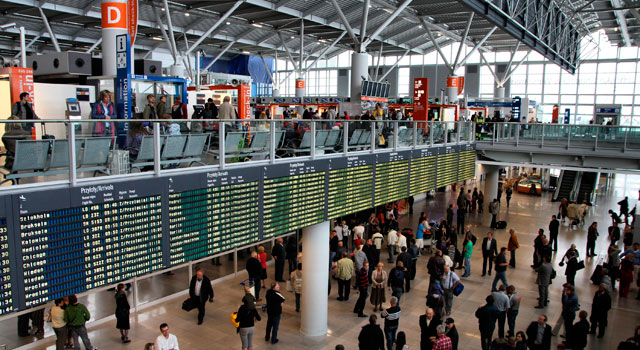
-Airport (confirmed)
Showing bits of the presenter’s travel.
Approach/style
For our documentary, the style is
intentionally BBC Three. BBC three produces content that has purpose, that
stimulates emotions and provokes reactions, particularly from young people. For
the documentary, we want to approach the topic as an investigative documentary
with our narrator, Liam Alexandru, finding out whether our generation is
growing numb to the holocaust and our past. We will also test out having an
Edgar Right Style to our documentary, in terms of montage and quick cuts – when
our character is traveling from England to Berlin.
For the Interviews, we want to film
them as a conversation, incorporating the narrator as a character rather than
just a voice, this would be like how Louis Theroux approaches difficult
subjects, and isn't afraid to tackle them.
For GV’s, we’ll be doing establishing-
and inside the car-shots, use archive footage and photos (awaiting
confirmation), some drone shots of locations, walkie-talkie shots with the
presenter, stock photos/footage of Berlin (the wall, streets, people etc.)


#/media/File:HMSCavalier.jpg)


)